Agrivoltaics at US Solar
Agrivoltaics offers numerous benefits to the environment and surrounding communities beyond the energy production.
What Is Agrivoltaics?
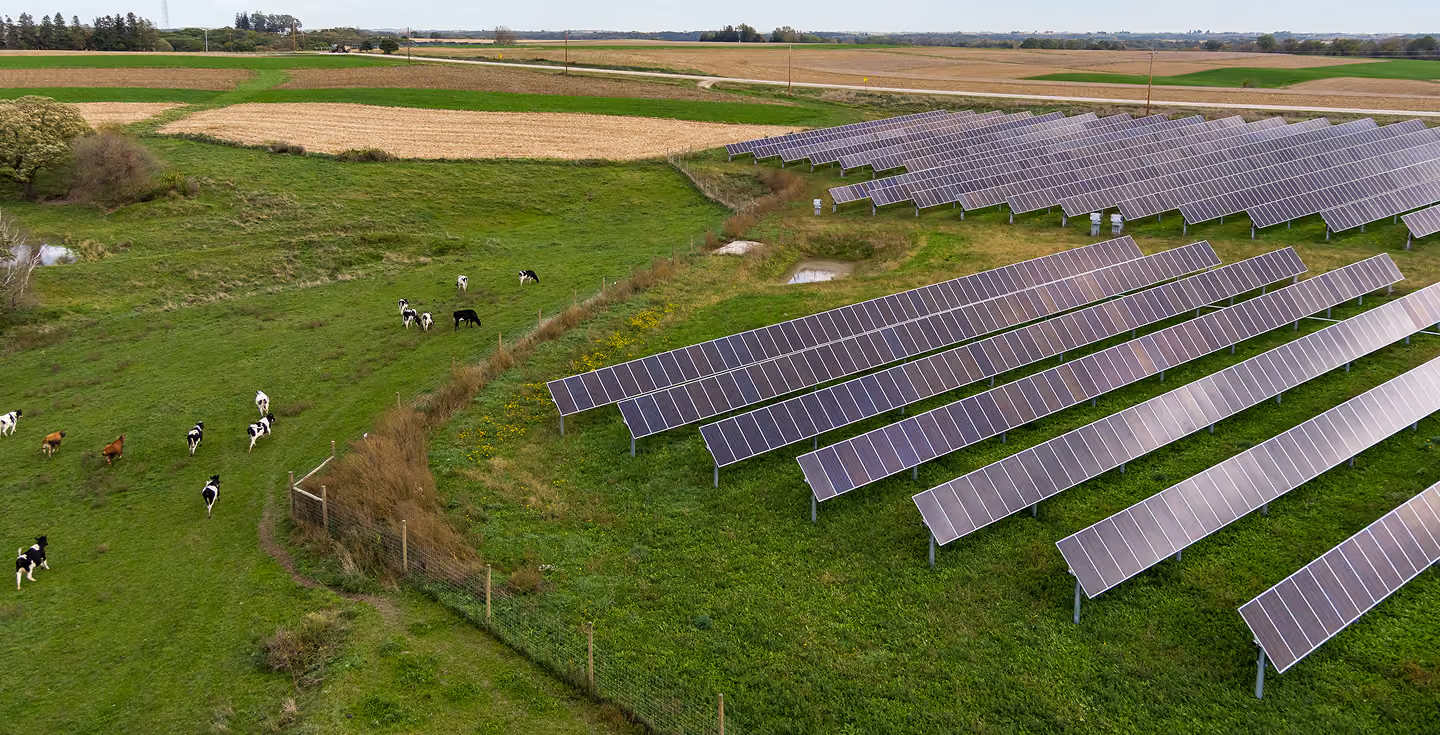
Agrivoltaics is the combination of agriculture and solar production (photovoltaics). According to the National Renewable Energy Laboratory (NREL), agrivoltaics is the concept of using solar projects to create renewable energy and provide space for local agricultural activities. Growing hand-harvested crops, honey production, and small livestock grazing can occur both underneath and next to solar installations. US Solar has been piloting these various approaches for years on our solar sites.
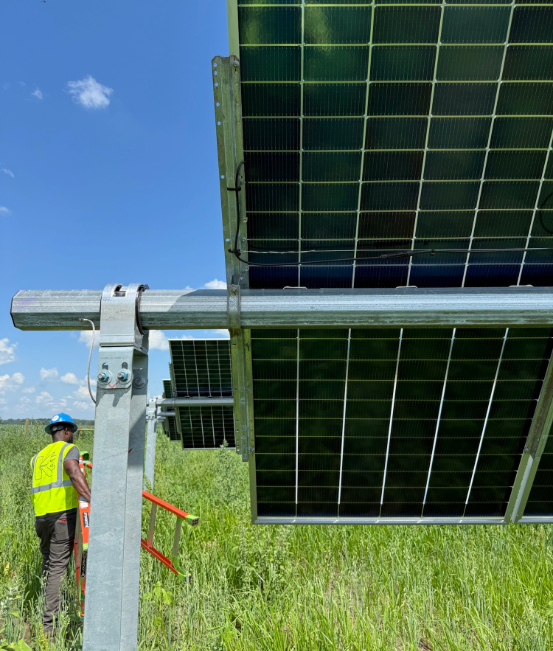
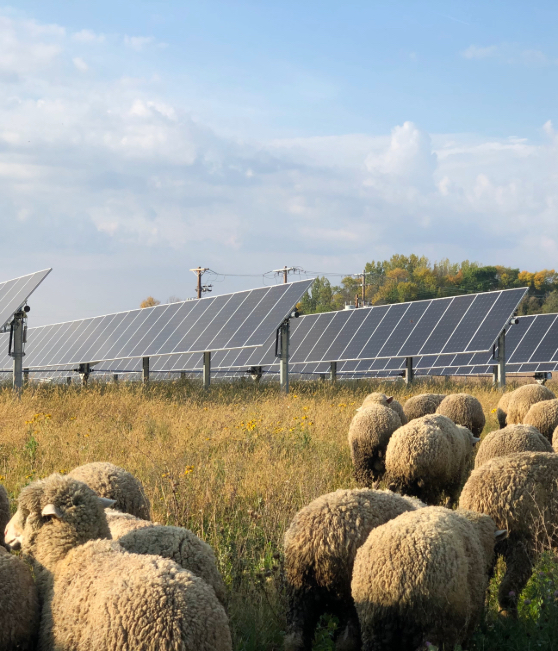
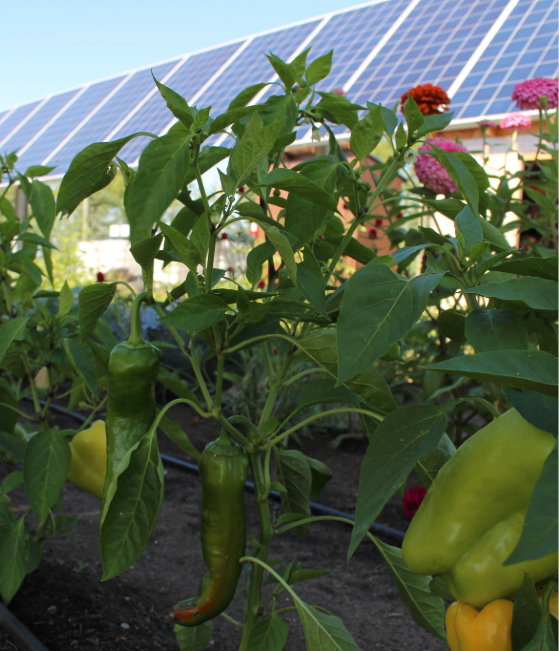
Building a Solar Project
Ground-mounted solar panels are installed on an area of land.
Supporting Plants and Animals
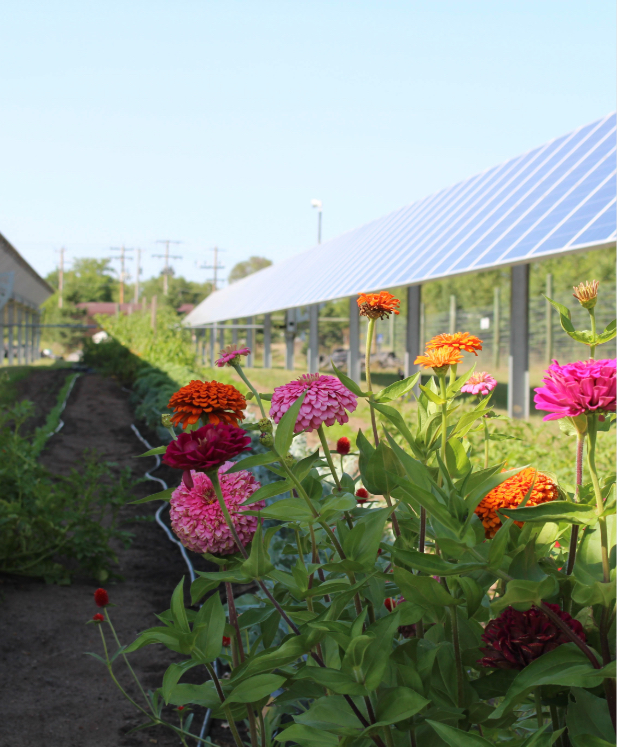
Pollinator-friendly plants, hand-harvested crops, and native grazing grasses are planted under the panels.
Benefiting People & Planet
The land is sustainably used to benefit native habitats and animals while being used for crops and energy.
Big River Farms Partnership
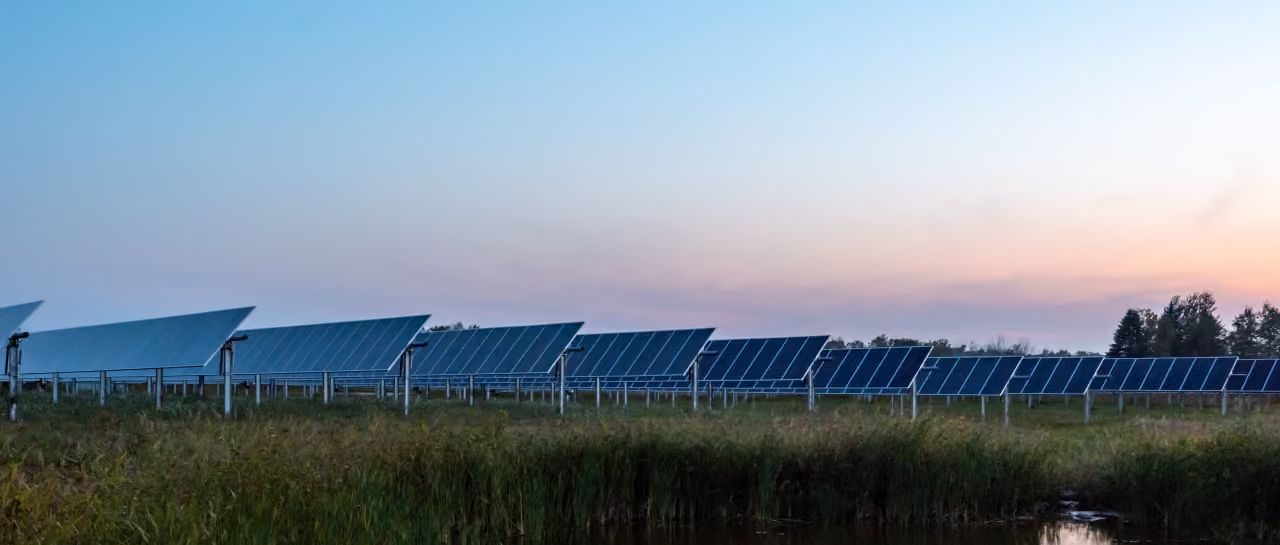
In partnership with NREL, US Solar kicked off a first of its kind agrivoltaics partnership with Big River Farms in Big Lake, Minnesota. Big River Farms is an incubator farm near Marine on St. Croix, Minnesota. Their focus is on supporting emerging farmers — helping them gain access to land, hone their farming skills, provide farming resources, grow organic food, and connect to markets.
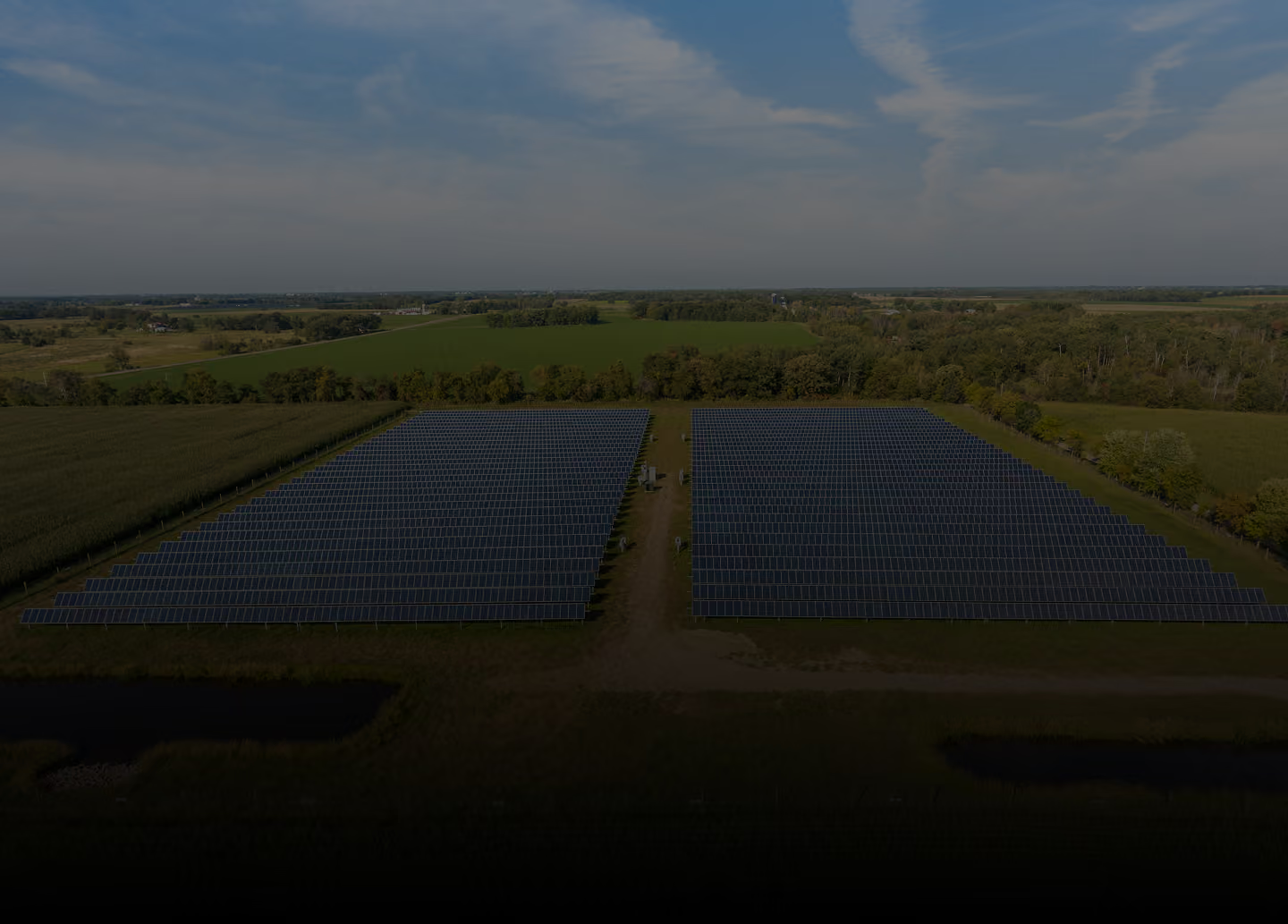
US Solar’s Big Lake site is a 9-acre, 1 megawatt (MW) solar array sitting on an 18-acre parcel owned by US Solar. This project was built in 2018 and was planted with a native pollinator mix, including 7 grasses and 18 flowering plants, surrounded by a couple hundred spruce trees. It was designed and planted based on the Minnesota Board of Water and Soil Resources’ (BWSR) Minnesota Habitat Friendly Solar Program and was scored as providing exceptional pollinator habitat.
The unique combination of US Solar owning the site, having an established solar facility, and having a readily available control area outside of the solar facility makes this site an excellent candidate for piloting innovative agrivoltaic opportunities. In the past, US Solar has partnered withThe Land Institute to trial silphium on this site and is also currently a host to both commercial beehives through Bare Honey and native bee boxes through Bee Kind MN.
Now, US Solar is growing a deeper partnership with NREL and Big River Farms to test adding horticultural vegetation to this site. Horticulture is the process of cultivating plants sustainably. Big River Farms is working with its farmers and planting crops both between rows of solar panels, as well as maintaining a control plot outside the solar facility to better understand the difference in crop production and suitability between crops grown underneath and around solar arrays vs. crops grown in the open.
This partnership is about more than crop research, though. Land access remains a large barrier to emerging farmers. US Solar will continue to make the Big Lake site land freely available to BRF and their farming program to help increase access to farmable land. US Solar also hopes to provide access to further sites to support more farmers.
US Solar’s Efforts to Advance Agrivoltaics
In 2017, leadership at US Solar played a role in creating the Habitat Friendly Solar Site Assessment with the Minnesota Board of Water and Soil Resources. This assessment evaluates if a solar project site meets the requirement to be a Minnesota Habitat Friendly Solar Program. US Solar continues to use this Assessment on all MN sites and is committed to achieving the highest standard on this scorecard.
Starting in 2021 on USS Hancock Solar LLC, located just west of Minneapolis, US Solar hosted about 20 sheep for grazing and are working with vegetation management partners and farmers to expand these practices to other US Solar sites. To prepare for sheep introduction, US Solar joined the American Solar Grazing Association to learn and support solar grazing.
US Solar has approximately 680 acres of pollinator friendly vegetation planted across our solar sites - more than one square mile.
Our Partners